GLP-1 Benefits and Side Effects: What to Know Before You Start
If you are considering GLP-1 medication, you may feel both hopeful and unsure. That is completely understandable. When you have struggled with weight loss for years, the idea of a treatment that may finally help can feel exciting. At the same time, it is wise to ask questions about safety, side effects, and whether it is right for your body. A tMomentum Health, we believe you deserve clear answers, not pressure. Understanding GLP-1 side effects and benefits can help you make a confident, informed decision. What are GLP-1 medications? GLP-1 medications mimic a natural hormone involved in appetite, fullness, insulin response, and digestion. According to Cleveland Clinic, GLP-1 agonists can help reduce appetite and hunger, increase feelings of fullness, and support weight loss for some patients. For people searching for semaglutide weight loss Texas, tirzepatide weight loss Dallas, or a GLP-1 weight loss clinic, it is important to look beyond the medication itself. The best results often come from combining treatment with medical monitoring, nutrition support, and lifestyle guidance. Potential benefits of GLP-1 weight loss treatment GLP-1 treatment may help support meaningful weight loss, improve appetite control, and support metabolic health. Mayo Clinic notes that GLP-1 medications can help with appetite regulation, satiety, blood sugar control, and metabolic health for some patients. But the emotional benefit matters too. Many people feel relief when they realize their struggle has not been about laziness or lack of discipline. Sometimes, the body needs medical support, and that is nothing to be ashamed of. Common side effects to know Like any medication, GLP-1s can cause side effects. Harvard Health explains that the most common GLP-1 side effects are digestive symptoms such as nausea, vomiting, diarrhea, and constipation. These symptoms may be more noticeable when starting treatment or changing doses. Less common but more serious concerns may involve the pancreas, gallbladder, stomach, intestines, or kidneys. That is why medical supervision matters. You should have a provider who reviews your health history, answers your questions, monitors your progress, and helps adjust your plan when needed. Why support matters after you start GLP-1 medication is not meant to replace healthy habits. The National Academy of Medicine notes that GLP-1 medications are most effective when combined with healthy eating and regular physical activity. Through The Momentum Method, Momentum Health provides clinical monitoring, nutritional guidance, lifestyle coaching, and personalized prescriptions when clinically appropriate. That means you are not just handed a medication and left on your own. You receive support designed to help you build consistency, protect your health, and move toward lasting change. Learn whether GLP-1 is right for you If you are curious about GLP-1 treatment, the next step does not have to feel intimidating. You can ask questions, share your concerns, and learn what options may fit your health goals withDr. Jeff Livingston. Ready to learn more? Schedule a consultation with Momentum Health and take the next step with support.
What to Expect from an Online Weight Loss Doctor in Texas

If you have been trying to lose weight and feel like nothing is working, we know how discouraging that can feel. It can be exhausting to count calories, restart another plan, or wonder why your body is not responding the way you hoped. At Momentum Health, we want you to know that needing help is not a failure. It may simply mean your body needs a more personalized, medically guided approach. For many people, working with an online weight loss doctor in Texas makes that first step feel more manageable. Instead of rearranging your whole day around an office visit, you can meet with a physician virtually, talk through your goals, and get guidance from the privacy of home. At Momentum Health, the goal is to help you recapture momentum, regain control, and move forward with support that fits your life. What happens during an online medical weight loss consultation? Your consultation is a chance to be heard. A physician reviews your health history, weight concerns, lifestyle, medications, and goals. This matters because sustainable weight loss is rarely about willpower alone. Metabolism, appetite signals, blood sugar, sleep, stress, hormones, and medical history can all affect your progress. At Momentum Health, Dr. Jeff Livingston takes a personalized approach. If GLP-1 medication is clinically appropriate, your treatment plan may include a prescription, ongoing monitoring, nutritional guidance, and lifestyle coaching. According to the Cleveland Clinic, GLP-1 medications work by mimicking a natural hormone that helps regulate appetite, fullness, digestion, and blood sugar response. Why virtual care can work for busy Texans Life is full, and health often gets pushed to the bottom of the list. That is exactly why telehealth can be helpful. Momentum Health currently serves patients located in Texas through a virtual, physician-guided process designed to be simple, private, and supportive. You can schedule a consultation, meet with Dr. Jeff, review your options, and receive a personalized plan without needing to sit in a waiting room. For busy professionals, parents, and anyone who feels stretched thin, this can make care easier to begin and easier to maintain. Medical guidance helps remove the guesswork One of the biggest benefits of medical weight loss in Texas is that you do not have to figure it out alone. A physician-supervised plan can help you understand what may be affecting your weight, whether GLP-1 treatment makes sense, and how to support your results with nutrition, movement, sleep, and consistency. GLP-1 medications can be effective, but they are not one-size-fits-all. Mayo Clinic notes that patients should consider the benefits, drawbacks, health goals, medication history, cost, and willingness to commit to lifestyle support before starting treatment. That kind of thoughtful decision-making is why medical supervision matters. What makes Momentum Health different? Momentum Health is built around more than medication. Through The Momentum Method, patients receive clinical monitoring, nutritional guidance, lifestyle coaching, and personalized prescriptions when clinically appropriate. This approach is designed to support long-term progress, not just a quick start. We know the first step can feel vulnerable, especially if you have tried before and felt disappointed. But you do not have to walk into this with all the answers. You only need a place to begin, a provider who listens, and a plan that is built around your body, your goals, and your life. Take the first step with support If you feel stuck, overwhelmed, or tired of starting over, there is a path forward. Momentum Health is here to help you recapture momentum with physician-supervised care that meets you where you are. Ready to get started? Schedule your appointment with Momentum Health today.
20 Tips for Becoming the Healthiest YOU in 2020

Health screening guidelines we can all use. Make a 2020 commitment to a better and healthier YOU. Many of us put off our self-care. We prioritize work, family, and other obligations before taking care of ourselves. Make 2020 different. Here is a basic health screening checklist you can use as a guide to optimizing your health. We want you to lead a longer and healthier life. This list should be used as a discussion guide between you and your primary care physician as recommendations will vary with age and other risk factors. Thank you to Live Your Life on Purpose for publishing this a article on Medium.
From Overweight to Overjoyed: Finding Hope Again with GLP-1s
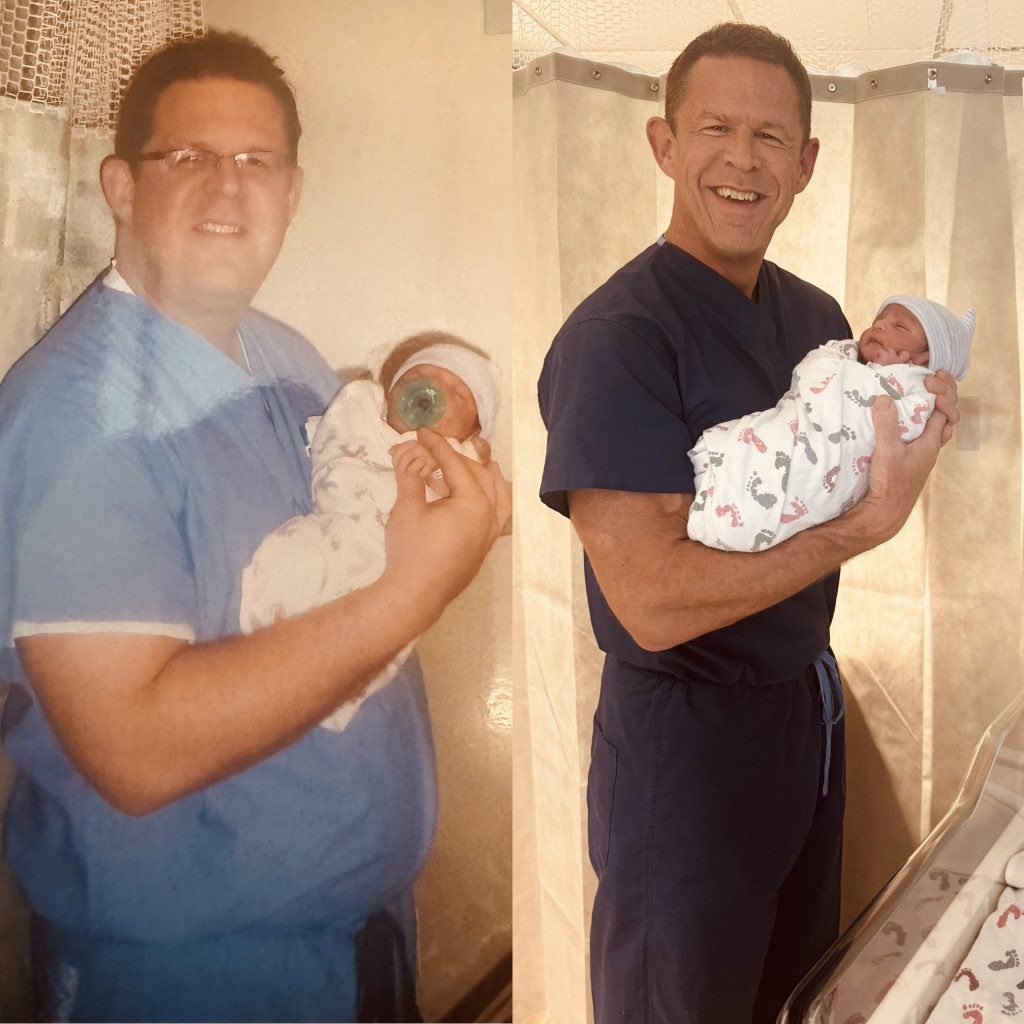
I hated looking in the mirror. I was overweight, exhausted, and disappointed in myself. As a physician, I understood the science behind weight loss, but I did not apply it to my life. I ate fast food, did not exercise, and did not take care of myself. I tried every fad diet and chased short-term fixes. I lost weight and gained it back. Over and over again. I couldn’t out-exercise my bad habits, nor could I starve myself thin without losing muscle and energy. Then everything changed. This photo tells my story better than words. The man on the left was trapped in a body that didn’t reflect his true spirit. I was caught in a cycle of denial and excuses. The man on the right found HOPE and the tools needed to turn that hope into lasting change. For me, GLP-1 medication (Semaglutide) was the missing piece. Suddenly, my appetite became manageable, and my constant thoughts about food quieted down. Weight loss medication allowed me to finally listen to my body. I started prioritizing protein, building muscle, and focusing on my health instead of falling into a repetitive cycle of crash dieting and guilt. It wasn’t just the weight. My energy, focus, and even confidence returned. I stopped fighting against my biology and began working with it. If You’ve Gained Too Much Weight, You’re Not Broken. You’re Human. Weight gain is not a moral failure but a biological response to stress, hormones, lifestyle, and genetics. But that doesn’t mean we can’t make changes together. I see this struggle in both men and women—smart, capable people who feel trapped in their bodies. You may feel stuck, but we can help lift you out of that place. GLP-1s, such as semaglutide and tirzepatide, offer a new way forward. They work with your body to: You Don’t Have to Rely on Willpower Alone I chose to break free from the shame spiral, and you can too. GLP-1 medications like Semaglutide and Tirzepatide can change the game. You are allowed to hope again. Your healthiest, strongest, and most confident self is still within reach. Is it time for you to take the next step? My Advice: Start Small, Start Honest, Start Now You don’t need to be perfect to begin. Begin with these simple considerations: It’s Not Just About Weight. It’s About Freedom. Today, I feel strong, clear-headed, and like myself again. The best part? I get to help my patients feel the same way. If you’re struggling, if you’ve tried everything and feel like nothing works, I see you. I was once in your shoes. And I promise: there’s still time to surprise yourself. Transform your body and your life. Let’s find hope again. — Dr. Jeff Livingston
Resolutions: To Achieve or Not to Achieve
This week’s tip for a successful resolution is: Make your resolutions achievable Don’t bite off more than you can chew Momentum Health OB/GYN’s Resolutions for 2010 Here are some of the ways the staff is keeping their resolutions achievable. Complex Carbohydrates I mentioned previously simple carbohydrates. We are now going to start talking about complex carbohydrates or whole grain foods. Complex carbohydrates: If you are between the ages of 19 and 50, you need 6 servings of complex carbohydrates per day. If you are over the age of 50 you only need 5 servings per day. One serving of a carbohydrate equals 15 grams or ½ cup cooked pasta or rice. I know this sounds complicated but what I try to do is have one serving of carbohydrate for breakfast, 2 for lunch, and 2 for dinner. I save that last serving for the unknown because I never really know when I’m going to leave the office and what I have originally planned to eat changes. I can’t tell you how many times I’ve walked in the door at 7:00 pm and one of my kids invariably has a school project that is due the next day and they need a large Styrofoam ball. So instead of preparing the meal I had originally planned, I am now on my way to the nearest craft store. I may also snack on something during the day that I was not really planning on. For instance, one of the doctors brought in some bagels and I really wanted one. So I enjoyed half a bagel with a little of the low fat cream cheese as a morning snack. Breakfast ½ cup eggs1 slice Whole-wheat bread Snack Cheese5 crackers Lunch Chicken breastSalad½ cup potato Snack Yogurt Dinner HamburgerWhole-wheat bunSalad So how do you know if what you are purchasing is a whole grain or a complex carbohydrate? Grilled Chicken with Roasted Vegetables (This is one of my favorite things to fix. Make this recipe your own by changing the chicken marinades and the vegetables you use). 1 package any grill marinade mix of chicken, pork chops, beef Your choice of vegetables: Your choice of herbs: Balsamic vinegarSalt and pepper to season Prepare marinade per package instructions. Marinate your choice of meat for about 15 minutes. Meanwhile, cut vegetables in large chunks. Place in 13X9 oven-safe pan coated with non-stick cooking spray. Place vegetables in pan and add basil, oregano and/or garlic and season with salt and pepper if desired. Sprinkle with balsamic vinegar if desired. Roast vegetables until tender in oven at 400 degrees. Put chicken on grill and grill until juices run clear. Serving Size – ½ cup Nutritional Information Per Serving of Vegetables:Calories 170Protein 5 gramsCarbohydrates 15 grams (without potatoes)Carbohydrates 30 grams (with ½ cup potatoes) Grilled Salmon with Rosemary 1 pound salmon fillet2 whole lemons, slicedFresh rosemary sprigs, about 201 garlic clove, minced1 tbsp. Dijon mustardNonstick cooking spraySalt Lay two pieces of foil on top of each other. Spray foil with non-stick cooking spray. Place lemon slices on foil. Top lemon with rosemary sprigs, reserving 2-3 sprigs. Strip rosemary stem of leaves and chop. In small bowl, mix the minced garlic, Dijon mustard and chopped rosemary. Spread on top of salmon. Place foil on grill and cook until salmon is opaque in center, about 20 minutes. Carefully remove foil and salmon wearing oven mitts. Cut salmon into 4 portions. Nutritional Information Per Serving:Calories 212Saturated fat 2 gramsTotal fat 12 gramsCarbohydrates 1 gramProtein 23 grams Serve with above roasted vegetables, salad and fresh fruit for dessert. I am proud to announce that 2 more staff members have joined our group. Our weight loss for this week was 22 pounds!
Social Media Savvy Doctors
Doctor-patient relationships no longer stop at exam room walls. Medical communication is being transformed. Doctors are tweeting. Patients are posting to medical practices’ Facebook walls. Medicine has entered the world of social media. Dr. Jeff Livingston at Momentum Health OB-GYN in Irving, Texas, uses Facebook and Twitter to share the latest health news with his patients. When Livingston comes across an interesting health-related article, he shares it on the social sites. Post topics range from breastfeeding and weight loss to medication updates. The reason: Informed patients engage in higher-level discussions during exams, he says. And that means time is well spent. Read more »
Take Two Apps and Call Me in the Morning

Will doctors recommend health apps to patients? There has been an explosion in health apps. Patients are using them for weight loss, calorie counting, exercise monitoring, ovulation calculation and for many other health needs. But to truly integrate the concept of health apps in the health care system healthcare providers will need to get involved. There is discussion in the health IT world lately regarding physician adoption of technology specifically mobile health apps, electronic record systems and patient portals. Doctors have now been plugged into the equation for technological innovation. This represents a paradigm shift for doctors. Life was much simpler when all we had was a pager and a stethoscope. On the other hand, incorporating new innovation is nothing new for doctors. Physicians are constantly exposed to innovation. We are approached with new medications, new surgical devices, new equipment and new lab tests. Frequently, doctors are pitched a new product and have to decide whether to integrate it into practice or to pass for now. With medications, medical devices and lab tests the decision to accept and adopt is complex. It involves analyzing safety, efficacy, cost and other factors. Some physicians have the early adopter mentality. At home, we are the first to buy the latest iPhone (even though our current one works fine). We also rush out and buy a 3D television (much to the annoyance of our spouses). Early adopters are the first to try a new surgical technique. Other physicians are more likely to wait and view the success or failures of the early adopters before deciding to jump in. In many ways physicians are already leading the way in mobile health. The majority of doctors are using smart phone and physicians are early adopters of the iPad. Physicians are using apps clinically within the daily workflow. I use AirStrip OB daily to monitor my patients in labor and Epocrates to check medications. Using medical apps has gone mainstream and Health apps are flooding the market. This trend will continue as the Internet itself moves from the laptop to mobile. We know physicians will use health apps but will they prescribe apps to their patients as a direct part of patient care? It is very important that app developers understand the physician mindset if you expect us to use apps and to recommend your product to patients. We will not utilize or recommend a health app just because it is cool or just because we can. Adoption is unlikely to be based on cost, efficacy and safety. Your app needs to meet two simple criteria. First, the app needs to make physicians’ lives easier. Second, it needs to make the care we provide our patients better. Currently I prescribe a few in clinical practice. I suggest TweetWhatYouEat.com for weight loss. I like the iPregnancyApp.com for my pregnant patients. I suggest the HealthTap.com app for access to physician driven health information. Our practice is about to release our own app for our practice in 2013. So will physicians recommend apps to patients? Absolutely! Give us something worthwhile and we will be all over it. We ask very little in return – make our lives easier and make the care we provide better.
Why This Doctor Decided To Follow His Own Advice
There is an old saying in Medicine, “Medice, cura te ipsum”, which in English means, “Physician, heal thyself.” This doesn’t mean that as a physician I can’t go to the doctor or that I have to perform surgery on myself. What it does mean to me is that as a physician I should set a good example for my patients, and practice what I preach. I can’t say that I have always done that. My father, who is very fit and active in his 70’s, has said to me that there are people who eat to live and people who live to eat. I fall into the second category. Food for me has been something to celebrate with, console myself with, stave off boredom or fatigue with, and occasionally, nourish my body with. When I was in college playing basketball 2 hours a day and sporting a 20-year-old’s metabolism, I could get away with eating whatever, whenever. But as happens to most of us, our activity levels decline with age, our stress levels may increase, and our metabolism decreases. And we gain weight. Dr. Elisabeth Kubler-Ross in 1969 described the five stages of grief as denial, anger, bargaining, depression, and acceptance. While she was relating this to people faced with a terminal illness, I think that her model can be applied to those people dealing with a chronic disease, such as diabetes, hypertension, or in my case, obesity. I’m sure that over the years, as I grew more sedentary, and larger, I went through all of these stages. The last stage is acceptance. When talking about a chronic illness, such as obesity, I think acceptance is the realization that you have a chronic condition, you’re not going to wish it away, and you have to learn to manage it. I had that realization early this year when I got the courage to step on the bathroom scale, and the digital readout read, “OL”. In case you’re wondering, OL means over the limit. The limit on that scale is 350lbs. Now I’m very tall, 6’7”, but even so, I would have to be about 8 feet tall to justify more than 350lbs. I remember thinking, “Kevin, you are so fat that the scale won’t even tell you how fat you are.” In that moment, the first four stages of grief ran through my head at once, followed by a moment of clarity. I realized, and accepted, the fact that I suffer from obesity. At that moment, like many other people who realize they have a chronic condition, I had to decide what was I going to do. The first thing was, to be honest with myself about why I wanted to lose weight. Having a scale that doesn’t go up high enough is a wake-up call, but not a reason. The scale in my office goes up to 450lbs, and I’ve seen 5x and 6x scrubs for sale. Also, I have a fantastic family who I know loves me no matter how much I weigh. So why go through all the diet, exercise, frustration, and self-denial it takes to get back on track. I was able to come up with quite a few reasons. A lot of them had to do with my family. I also feel like I was blessed with a healthy body, and in some way, I feel that it is a sin not to take care of it. Another reason goes back to the proverb, “Physician, heal thyself.” Every day, I see patients who are overweight, or obese, and I see the consequences of this. Obese patients often have high blood pressure, diabetes, infertility, irregular periods, or are pregnant and have pregnancy complications. As you might expect, I would try to talk to my patients about healthy eating, exercise, and the benefits of weight loss. But as the words came out of my mouth, there was always the feeling that I was in a “do as I say, not as I do,” moment. Sometimes I would try to rationalize my way out of it by saying to the patient, “I know that exercising and losing weight is hard,” with my out of shape, obese self as living proof. I’ve always felt very comfortable talking to my patients about other healthy lifestyle choices such as quitting smoking, alcohol in moderation, don’t use drugs and practice safe sex. But when it came time to talk about weight loss, I felt like a hypocrite. Having made up my mind to do something, I sat down with my family and told them where I was and where I wanted to go, and I asked for their help. They helped me get all the junk food out of the house, and together we’ve come up with better meals to cook at home and less eating out. We switched to using smaller plates to avoid the “have to finish your plate” syndrome and help with portion control. And then I started exercising again. When you’re out of shape and trying to get back, the number of excuses you can come up with not to exercise are almost infinite. You have to, as the Nike commercials say, “Just Do It.” I don’t recommend expensive exercise equipment or gym memberships unless you are truly committed to using them. I am however, a fan of watches or phone apps that track your steps. If you’re walking, then you’re moving, and if you’re moving, you are burning calories. I’ve worked my way up from walking, to using an elliptical machine, to cycling and jogging. I also mix in some weightlifting to try to tone up my muscles (this helps keep up your metabolism because muscle burns more calories at rest than fat). I have gotten to the point where I try to exercise at 30-60 minutes 5 or 6 days a week, and I try not to take more than two days in a row off. It probably took me 3 or 4 months to get to this point,
The Quarantine 15: Who Else Is Fighting It and How Can We Fix It?

COVID-19’s unexpected effect on expanding waistlines. Why is my belt so tight? I can’t buckle my skinny jeans. I call out “Honey, I think my pants shrunk in the dryer,” as I loosen my belt a notch to accommodate my new #dadbod. I don’t think I am alone. My patients are complaining of weight gain too. As a result of the stay-at-home instructions, many of us altered our activity levels, diets, and routines. The result — The Quarantine 15. Obesity may be an unexpected outcome of this infectious disease pandemic. Why are we gaining weight? Various theories attempt to explain the mysterious Quarantine 15. Some blame stress. Stress increases our body’s cortisol production. Cortisol is the “stress hormone” known to increase the appetite. When under stress, we alter our food intake. Some people undereat. The medical term for undereating stressed-out individuals is “weirdos.” “Normal” people tend to grab a bag of Doritos and dip them in hot fudge covered ice-cream. Author’s image Ice-cream and other sugary carbohydrates trigger a dopamine surge. Dopamine hormone dopamine is produced in the pleasure center of the brain, an area of the brain called the nucleus accumbens. Dopamine is our mind’s reward system. When times are tough, rewards and treats provide relief. Some believe we naturally gravitate towards carb-laden foods when stressed out to get a quick energy boost. The sugar rush makes us feel better, temporarily. But what follows is the crash and crave phase. The crash makes us feel hungry again as our brains seek out more dopamine. Dopamine and cortisol. Is the Quarantine 15 a result of a complex combination of physiological hormonal changes? Perhaps. But I suspect we are just bored. Boredom leaves us feeling tired and sluggish. We tell ourselves we were “forced” to stop working out when gym and fitness centers closed during the lockdown. But many did not substitute an evening jog, daily walk, or even get up off the couch. Not only did we decrease our physical activity, but alcohol sales also skyrocketed up 27% during the pandemic. People are doing less and drinking more, and increased alcohol consumption means more calories What goes better with a craft beer than some fresh local takeout! Since restaurants were closed to dine-in, many of us began ordering take-out. Food delivery services increased sales during the lockdown. Many of us ordered food to “to support the local restaurants.” Hey, we are #inthistogether, and everyone has to do their part.
Avoid This Mistake or Your New Year’s Resolution Will Fail

Create an action plan, not meaningless words. I want to lose weight. I want to make more money. I want to eat healthier. These are common New Year’s resolutions all destined to fail. These nonspecific statements are just words. Setting a goal is one step, but creating a plan is what leads to success. Resolutions fail. Plans work. What do you want to change? Before you create a New Year’s resolution, stop and reflect on what you want to change in your life. What is the most important issue to you? Scratch everything off the list of what you should change keeping only what you want to change. We all have things we should change, but these may or may not be the issue about which we are most passionate. What does success look like to you? Once you have decided what you want to change, imagine yourself at the end of the road. The goal has been achieved. The race has been won. What is the result or outcome? If your goal is a 20-pound weight loss then imagine how you would feel, how you would look and how life would be different. Make sure that the outcome is acceptable, appealing and motivating. If visualization of your future self is not motivating then you may have chosen the wrong goal. How did you achieve this goal? View your self from the future and determine how you got there. What were the steps you took to get to your imagined outcome? Write down the steps. Working backward allows you to evaluate what changes in your life are necessary. Create your plan based on these discoveries. Decide to change Deciding to change may sound silly but it is crucial. Your mind will constantly work against you making excuses and rationalizations. Once the decision is made then there is no more debate. It is done. We must internalize the decision. Measure your progress Find a way to track your steps. If your goal is weight loss then use Myfitness pal. If your goal is to exercise, then use a Fitbit or an Apple watch. If your goal is freedom from debt, then track your credit cards. Some hire a personal trainer, a financial counselor or an executive coach. Choose a system that works for you to monitor your journey and to hold yourself accountable. Analyze the results and make the necessary changes. Be open to change, adapt and adjust. Remember why you are making the change Maintain a laser-like focus on the underlying reasons you are seeking change in your life. Why are you making this change? Find ways to remind yourself each day of your WHY. Making a resolution will not trigger change. Create a plan and have the grit to stick to it. Thank you to Live Your Life On Purpose for publishing this a article on Medium.